About Jammu
Jammu Holiday Package: Places to Visit, 2 Day Plan & Cost
Most people treat Jammu as a stop on the way to Kashmir. They arrive in the afternoon, circle the temple, eat a late lunch, and leave by evening wondering why they did not stay longer.
That is the real problem.
Jammu is not a checkpoint. It is a city that reveals itself slowly, in early morning walks through old bazaars, in the quiet upper levels of Bahu Fort before the crowds climb up, and in the difference between a hotel near the bus stand and one near the Tawi river.
A rushed afternoon gives you heat and traffic. A planned two days gives you the city as it actually feels.
This Jammu holiday package is built around that difference. We are not listing monuments. We are planning movement, timing, and stays that do not waste your hours.
Quick Snapshot
Jammu Trip Cost for Couple & Solo Travelers
Budget Range: ₹3,500 to ₹5,000 per person
Includes
-
Non-AC hotel near the city center
-
Shared transport
-
Basic breakfast
Best For
-
Solo travelers
-
Students
-
Quick stops
Mid Range: ₹5,500 to ₹8,500 per person
Includes
-
AC hotel in a quieter zone
-
Private cab for local travel
-
Guided timing
Best For
-
Couples
-
Families
-
First-time visitors
Premium: ₹9,000+ per person
Includes
-
Riverside or heritage-style property
-
Private vehicle throughout
-
Flexible timing
Best For
-
Couples wanting space
-
Slow travelers
-
Winter visits
What Changes the Price
Stay Location
A hotel near the bus stand costs less.
A hotel near the river or Residency Road costs more but saves transport time.
Transport Type
Shared autos vs private cab changes both cost and experience.
Season
October to February rates are 20 to 40 percent higher than summer.
Weekend vs Weekday
Saturday night stays often carry a surcharge.
Why Choose This Package
We have planned Jammu trips for travelers coming from Delhi, Chandigarh, and Punjab who usually skip the city entirely or see it badly.
The difference is almost always timing and hotel location.
Local Planning Expertise
We know which temple entrance to use at 8 AM vs 11 AM.
We know when Bagh-e-Bahu turns into a local picnic ground.
That changes your day.
Customizable Itinerary
The plan above is a base.
If you want more time at the museum and less at the fort, we adjust.
Right Timing
We do not send you to Peer Kho at noon in June.
We do not send you to Bahu Fort on a Sunday afternoon.
On-Ground Support
Local contact number throughout the trip.
Not a call center.
Plan Your Jammu Trip
Get hotel suggestions, itinerary customization, and exact travel costs for your dates.
What Is Included in This Jammu Package
Stay
One night in a mid-range hotel near the Tawi river or the old city edge.
We avoid the bus stand area hotels.
They are cheaper but the noise starts at 5 AM.
A room slightly toward the Civil Lines side or near Residency Road gives you quieter mornings and easier auto access.
Meals
-
Breakfast included
-
Dinner excluded
Transport
-
Pickup from Jammu Tawi Railway Station or Bus Stand
-
Local auto-rickshaw and cab arrangements
-
No shared sightseeing buses
Activities
-
Temple visits with timing guidance
-
Bahu Fort walk
-
Old city heritage walk route
Not included:
-
Aquarium
-
Forced shopping stops
What Is Not Included
-
Entry tickets to monuments and museums
-
Meals other than breakfast
-
Personal expenses, tips, and shopping
-
Optional activities outside the agreed plan
-
Travel insurance
Who This Jammu Package Is Perfect For
Couples
Jammu works well for couples who do not want a crowded hill station but still want a change of scene.
The riverside evenings and old city walks are better shared.
The mid-range hotels near Residency Road offer decent privacy without the resort price tag.
Solo Travelers
The city is navigable alone.
The temple areas are safe.
The local transport is straightforward.
A solo traveler benefits most from the early morning timing, when the city is calm and easy to read.
First-Time Visitors
If Kashmir is your main goal, this package gives you a proper Jammu stop instead of a rushed temple visit.
You understand the city before moving uphill.
Slow Travelers
People who prefer two deep days over four rushed ones.
Jammu does not have twenty attractions.
It has five or six good ones, and the rest is about how you move between them.
Why Visit Jammu
Jammu does not try to impress you immediately.
The city is warm, slightly chaotic, and spread out. That is exactly why it rewards a slower plan.
The old city still operates on a rhythm that starts before sunrise. By 6:30 AM, the ghats along the Tawi have locals performing morning rituals while the streets above stay relatively empty. By 10 AM, that same area is packed with vehicles, pilgrims, and noise.
If you are coming from Delhi or Chandigarh, Jammu is the first place where the air changes. The plains end here. The mountains start.
A well-timed Jammu sightseeing plan lets you feel that transition without exhaustion.
Best Places to Visit in Jammu
Raghunath Temple
The complex is large, and most visitors see only the main sanctum.
The front entrance collects all the footfall.
The rear corners of the complex stay nearly empty, even when the main area is packed.
Shoes must be removed at multiple points, so carrying a small bag helps.
Visitor Information
-
Entry Fee: Free
-
Time Needed: 1 to 1.5 hours
-
Best Time: Before 9 AM or after 5 PM
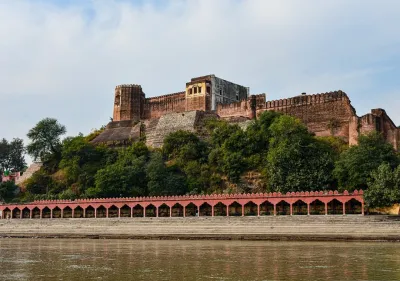
Bahu Fort & Bagh-e-Bahu
The fort itself is modest.
The real reason to come is the garden above the Tawi river.
Weekday mornings are calm.
Weekends and evenings get crowded with local families.
The aquarium inside the garden is small. Skip it if you are short on time.
Visitor Information
-
Entry Fee: ₹10 (Indian), ₹20 (Foreigner) for garden; Aquarium separate
-
Time Needed: 1.5 to 2 hours
-
Best Time: 8 AM to 10 AM
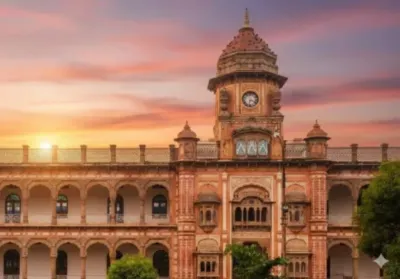
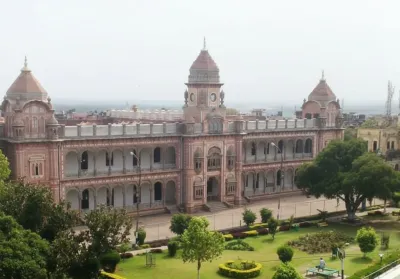
Mubarak Mandi Palace
Parts of the palace are under restoration.
Do not expect a fully polished museum.
The Darbar Hall and the pink facade are worth seeing, but the experience depends on which sections are open that day.
Check before visiting.
Visitor Information
-
Entry Fee: ₹10 to ₹20 (varies by section)
-
Time Needed: 45 minutes to 1 hour
-
Best Time: Morning hours
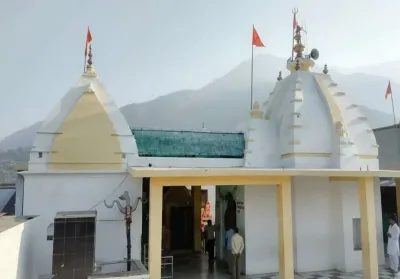
Ranbireshwar Temple
This is the large Shiva temple with twelve Shiva lingams in a row.
It is less crowded than Raghunath Temple, which makes the visit calmer.
Photography inside is restricted.
Visitor Information
-
Entry Fee: Free
-
Time Needed: 30 to 45 minutes
-
Best Time: Early morning
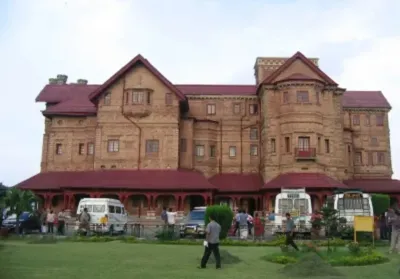
Amar Mahal Museum
A smaller museum in a red sandstone building.
The collection is limited but the building itself is interesting.
Most tourists skip this entirely, so it stays quiet.
Visitor Information
-
Entry Fee: ₹10 (Indian), ₹50 (Foreigner)
-
Time Needed: 45 minutes
-
Best Time: Late morning
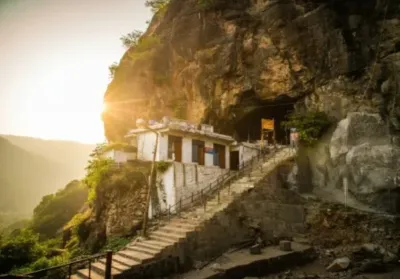
Peer Kho Cave Temple
Built into a hillside on the outskirts.
The cave section involves bending down and walking through a narrow passage.
Not ideal for elderly travelers or those with knee issues.
The view of the Tawi from the top is better than expected.
Visitor Information
-
Entry Fee: Free
-
Time Needed: 1 hour
-
Best Time: Morning or late afternoon
Things to Do in Jammu
Walk the old city lanes before 8 AM
Do not expect early morning action here.
Raghunath Bazaar starts closer to 9.
Before that, you are walking past closed shops and sweepers.
Sit by the Tawi river ghats in the evening
Not the developed promenade sections.
The older ghats near the temple areas.
The light changes around 5 PM.
Local families arrive after 6 PM.
The window between 5 and 6 is usually the calmest.
Eat rajma chawal at a local dhaba near the bus stand area
Not the restaurant version.
The dhaba version, served on steel plates, usually before 2 PM when they run out.
Browse the Dogra art shops near the old city
Most people miss these entirely.
The miniature paintings and basohli art reproductions are here, not in the mall shops.
Jammu Sightseeing Overview
A realistic Jammu sightseeing plan covers three zones:
Zone 1
-
Old city temples
-
Bazaars
Zone 2
-
Bahu Fort
-
River area
Zone 3
-
Peer Kho and outskirts
Trying to do all three in one morning means spending more time in traffic than at the actual places.
Sunday mid-morning at Bahu Fort means fighting for parking, shade, and even the walkway.
The parking is full, the garden is packed, and the walk up feels like a queue.
Start there at 8 AM instead.
Do the old city in the late afternoon when the temples are cooler inside.
Keep the evening for the river or a slow market walk.
2 Day Jammu Itinerary
Day 1: The Old City & The River
Morning (7 AM to 10 AM)
-
Reach Raghunath Temple early
-
Finish before the tour buses arrive
-
Walk through Kanak Mandi
-
Stop for tea
Late Morning (10:30 AM to 12:30 PM)
-
Mubarak Mandi Palace
-
Check which sections are open
-
Auto-rickshaw recommended in summer
Afternoon (12:30 PM to 3 PM)
-
Lunch break
-
Rest at the hotel
Evening (4 PM to 7 PM)
-
Ranbireshwar Temple
-
Slow walk toward the Tawi ghats
-
Find a spot before 6 PM
Day 2: Fort, Gardens & Outskirts
Morning (8 AM to 10:30 AM)
-
Bahu Fort
-
Bagh-e-Bahu
Late Morning (11 AM to 12:30 PM)
-
Amar Mahal Museum
Afternoon
-
Lunch
-
Rest
Evening (4 PM onwards)
-
Peer Kho Cave Temple
-
Finish before dark
Where to Stay in Jammu
Near Residency Road
Advantages
-
Convenient for restaurants
-
Easy auto access
-
Quieter than the bus stand area
Considerations
-
Slightly more expensive
Best For
-
Couples
-
Families
Near the Tawi River (Civil Lines Side)
Advantages
-
Better air
-
Better views
-
Pleasant mornings
Considerations
Some properties are older.
Near Bus Stand / Railway Station
Advantages
-
Cheapest option
-
Useful for very early departures
Considerations
-
Noise starts early
-
Not ideal for a relaxed stay
Near Old City (Raghunath Bazaar Area)
Advantages
-
Walking distance to temples
Considerations
-
Very busy
-
Parking is difficult
Best For
Travelers focused mainly on temple visits.
Nearby Places to Visit Around Jammu
Patnitop (110 km, 3 to 4 hours)
A hill station that works better as an overnight than a day trip.
The road is winding.
A same-day return means six hours of driving for two hours on the ground.
If you have a third day, add Patnitop.
Otherwise, skip it.
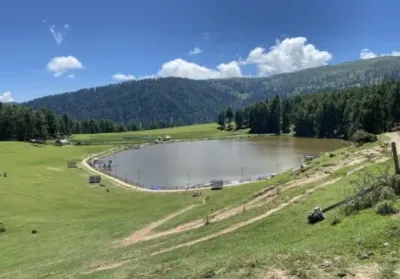
Mansar Lake (60 km, 1.5 hours)
A quieter lake with a small temple complex.
Less commercial than most tourist spots.
Good for a half-day escape if you want green space.
Best visited in the morning.
Surinsar Lake (40 km)
Smaller than Mansar.
Fewer facilities.
Better for a picnic than sightseeing.
Katra / Vaishno Devi (50 km)
Most travelers combine Jammu with Katra.
If you are doing the trek, plan Katra separately.
Trying to do Jammu temples and Katra in two days exhausts most people.
Shivkhori (80 km from Katra)
A cave shrine.
Only add this if you are already in the Katra area for two or more days.
Best Time to Visit Jammu
October to March (Recommended)
Temperatures stay between 10 and 25 degrees.
The mornings are crisp.
The afternoons are walkable.
This is when the city feels right.
Hotel rates peak in December and January.
Book at least two weeks ahead.
April to June (Hot)
Temperatures cross 35 degrees regularly.
Outdoor sightseeing is draining after 10 AM.
Hotels are cheaper.
If you must visit in summer, start every day at 6 AM and rest between 12 PM and 4 PM.
July to September (Monsoon)
Humid.
Occasional heavy rain.
Landslides on the mountain roads nearby.
Not ideal for a first visit.
Rates are moderate.
Cost by Season
Travel Tips for Jammu
-
Carry a pair of easy-to-remove shoes. You will take them off frequently at temples.
-
The old city auto-rickshaws do not always use meters. Fix the rate before starting.
-
Afternoon rest is not lazy in Jammu. It is practical, especially in summer.
-
Keep cash for small entry fees and temple donations. Cards do not work everywhere.
-
If you are heading to Kashmir next, buy your dry fruits and saffron in Srinagar, not Jammu. Better quality, better rates.
Mistakes to Avoid in Jammu
Trying to Cover Patnitop in a Day Trip
On paper it is short.
On road it steals your afternoon.
You spend the day in a vehicle.
Staying Near the Bus Stand to Save ₹500
You lose sleep and peace.
The auto rides to the actual sights add up in cost and time.
Visiting Bahu Fort at 11 AM on a Sunday
You will queue for parking, queue for entry, and find no quiet corner in the garden.
Skipping the Early Morning Window
Jammu before 8 AM is a different city.
After 10 AM, it is just heat and traffic.
Booking a Jammu Holiday Package That Treats the City as a Half-Day Stop
That is the most common mistake.
The city needs two slow days.
One rushed afternoon gives you a bad impression of a place that does not deserve it.
Plan Your Jammu Trip Without the Usual Hassle
Most trips do not go wrong because of the destination.
They go wrong because of timing, hotel location, or trying to fit too much into one day.
If you are looking for a Jammu holiday package that accounts for early mornings, afternoon rests, and the right hotel area, we can help.
We plan the movement, not just the monuments.
Get a Custom Jammu Plan in 30 Minutes
We will suggest the exact stay, realistic sightseeing pace, and travel timing based on your dates.
No generic templates.
More Attractions In Jammu