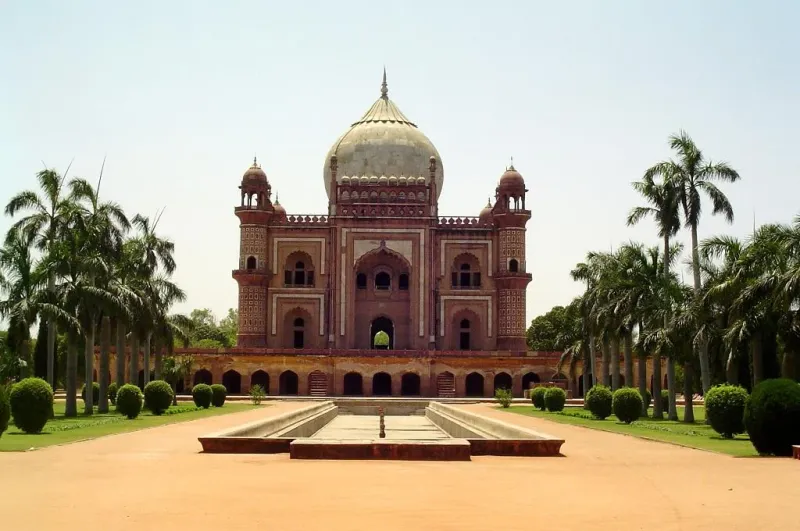
Safdarjung Tomb
- Attraction
- Price: Low
Safdarjung Tomb is one of Delhi’s most graceful Mughal-era monuments, known for its peaceful atmosphere, beautiful gardens, and grand architectural style. Built in 1754, this tomb was constructed in memory of Safdarjung, who served as the Prime Minister of the Mughal Empire during the reign of Muhammad Shah. It stands as one of the last major structures of the Mughal period, often called the “last flicker of Mughal architecture,” showcasing the final phase of this iconic building style.
The tomb is made of red sandstone and white marble, giving it a striking and royal look. The central chamber holds the cenotaph, and the main dome is large and rounded, reflecting classic Mughal design. Surrounding the tomb is a vast charbagh-style garden, divided into four symmetrical parts with water channels and pathways. This garden layout adds to the calm and relaxing vibe of the monument, making it a great place for visitors who want to enjoy architecture as well as nature.
Inside the complex, you can also see several small pavilions, including Jangli Mahal, Moti Mahal, and Badshah Pasand, each showing the charm of late-Mughal craftwork. Though the Mughal Empire was declining at that time, the detailing, arches, and decorative patterns still reflect their artistic excellence.
Safdarjung Tomb is located near the Lodhi Estate, close to many other heritage spots in Delhi, making it a popular stop for history lovers, architecture students, and photographers. Whether you want to learn about Mughal history, explore Indo-Islamic architecture, or simply relax in a peaceful green space, Safdarjung Tomb offers a memorable experience.
Today, it is protected by the Archaeological Survey of India (ASI) and remains one of Delhi’s most important historical sites, representing the city’s rich and layered past.