Panna Meena Ka Kund Jaipur Guide
Panna Meena Ka Kund Jaipur: Entry Fee, History & Visitor Guide
Introduction
When people visit Amer Fort in Jaipur, most of them finish the fort tour and leave the area. But just a short walk away sits a quiet place that many travelers almost miss — Panna Meena Ka Kund.
At first glance it looks simple. Just stone steps going down toward water. But once you stand near the edge and look carefully, the pattern of those steps starts to feel almost like a puzzle.
I remember standing there for a few minutes trying to follow the lines of the steps with my eyes. They move in different directions, yet everything still looks balanced.
This old stepwell near Amer Fort was built many centuries ago to store water. Today it works more like a small heritage stop where visitors come to see traditional architecture and take photos.
If you are planning a visit, it helps to know the Panna Meena Ka Kund entry fee, history, and travel tips before you go.
Quick Information
What is Panna Meena Ka Kund
If you walk a little away from the busy road near Amer Fort, you suddenly see a large square pit made of stone. That is Panna Meena Ka Kund.
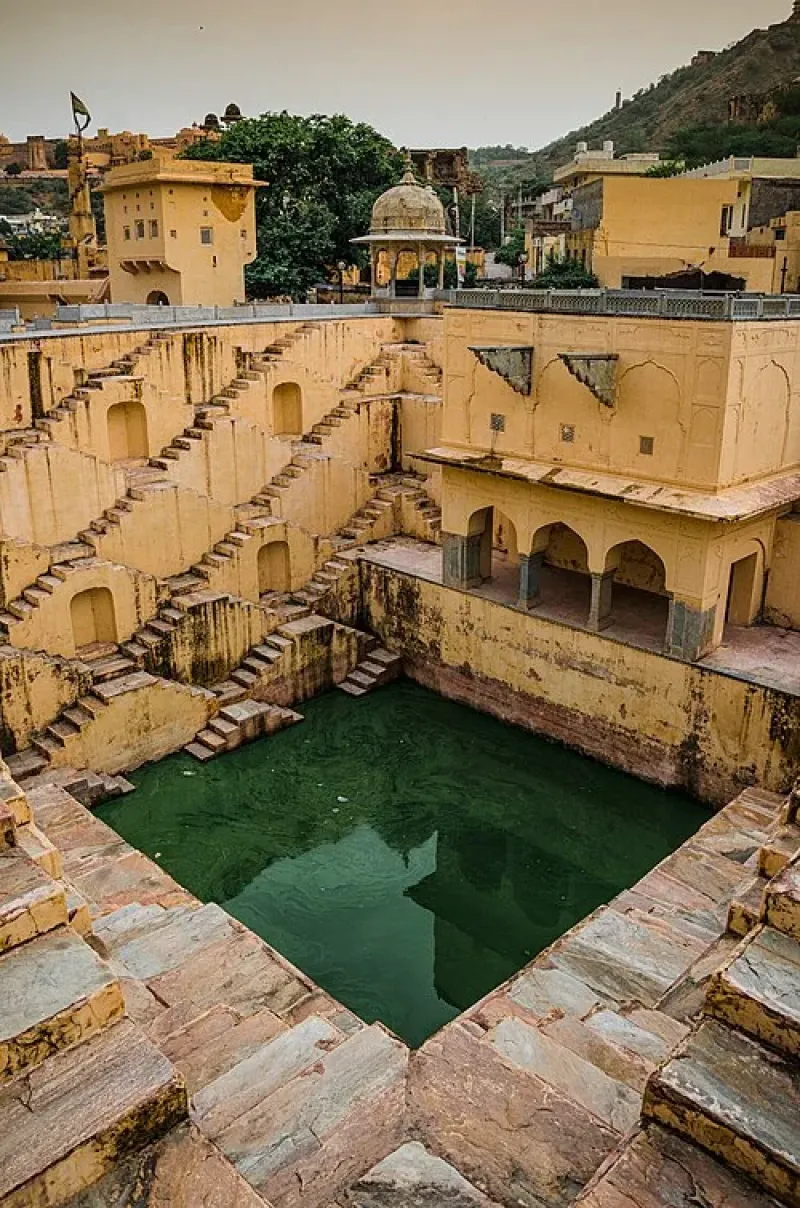
From the top it almost looks like a staircase going in every direction. Rows of steps move down toward the center where the water collects. The pattern feels a bit confusing at first, but that is exactly what makes the place interesting.
Many years ago this was simply a place where people came for water. Villagers from the Amer area used these steps to go down and fill their pots. In a dry region like Rajasthan, structures like this were part of everyday life.
Now things are different. The well is no longer used for water. Most people who visit Panna Meena Kund Jaipur come to see the old design, spend a few quiet minutes there, and take photos of the unusual staircase pattern.
Locally, some people still call it Panna Meena Ki Bawdi, which is just another way of referring to the same stepwell.
History of Panna Meena Ki Bawdi
The exact story of Panna Meena Ka Kund is not very clear today. Unlike big forts or palaces, stepwells were everyday places, so detailed records were rarely kept.
What most local guides say is that this kund was built several centuries ago when Amer was the main capital of the region. At that time people depended heavily on rainwater, so structures like this were very important.
During monsoon months, rainwater collected in the well. Later in the year, when water became scarce, people used the steps to walk down and collect it.
Older residents around Amer sometimes say that places like Panna Meena Ki Bawdi were also small meeting spots. Women came here to fill water pots, children played around the steps, and villagers often sat here to escape the heat.
As the city developed and modern water supply systems appeared, the stepwell slowly stopped being used for daily life. The structure remained though, mainly because the stone construction was very strong.
Today Panna Meena Kund Jaipur stands as a historic reminder of how communities once managed water in a dry region like Rajasthan.
Panna Meena Ka Kund Stepwell Design
One reason visitors find Panna Meena Ka Kund stepwell interesting is the design.
If you stand above the well and look down, the steps form repeating shapes that look almost like a zigzag pattern.
Three sides of the structure have long staircases. The fourth side has a small covered platform.
The steps move in different directions, but they still connect perfectly.
Because of this unusual design, the stepwell has become popular for photography.
But visitors are normally allowed to see it only from the top platform.
Architecture of Panna Meena Ka Kund
The design of Panna Meena Ka Kund is simple but very interesting. Stone steps go down toward the water from several sides, creating a repeating pattern that looks almost perfectly balanced.
In earlier times the well collected rainwater during the monsoon. As the water level changed, people used the different levels of steps to reach it. The strong stone structure and clean shapes also reflect the style seen in many Rajput-period buildings around Amer.
Another thing people notice is the cooler air near the bottom of the stepwell. The deep walls and shade helped keep the space cooler during hot days.
Panna Meena Ka Kund Entry Fee
Many travelers ask about the Panna Meena Ka Kund ticket price before visiting.
The good news is simple.
Panna Meena Ka Kund entry fee is free.
There is no ticket counter at the site. Visitors can walk inside the area and view the stepwell without paying anything.
However, the steps leading down into the well are usually restricted for safety reasons.
How to Reach Panna Meena Ka Kund Jaipur
Finding Panna Meena Kund Jaipur is very easy if you are already visiting Amer.
The stepwell is located very close to Amer Fort, only a few minutes away.
Distance from major places:
Jaipur City Palace → about 11 km
Hawa Mahal → about 10 km
Amer Fort → around 500 meters
Many travelers visit the stepwell before or after their Amer Fort trip.
Autos, taxis, and private cabs can reach the location easily.
Best Time to Visit Panna Meena Kund
The best months to visit Panna Meena Kund are from October to March.
During winter the weather is more comfortable for walking around the Amer area.
Morning and evening hours are better for two reasons:
• softer sunlight
• fewer visitors
During summer afternoons the stone steps can become very hot.
Visitor Experience at Panna Meena Ka Kund
Compared to other places in Jaipur, Panna Meena Ka Kund Jaipur feels much quieter.
There are usually only a few tourists at a time. Some take photos, some just stand near the railing and look down at the patterns.
When I visited, a local guide explained that the design of the steps also helped people move down without crowding in one single direction.
It’s not a place where you spend hours.
But even a short 15-minute stop gives a small glimpse into how water systems worked in Rajasthan many centuries ago.
Photography Tips at Panna Meena Ka Kund
The best photos of Panna Meena Kund Jaipur are usually taken from the top platform. From there you can clearly see the full pattern of the steps.
Morning light works well because the sunlight creates shadows along the staircases. These shadows make the symmetrical design stand out more in pictures.
Many visitors try to frame the steps evenly on both sides to capture the symmetry of the stepwell.
Nearby Attractions
Most visitors see Panna Meena Kund Jaipur while exploring the Amer area, because a few well-known places are located very close to it.
Amer Fort
This historic fort sits on a hill just above the Amer town. Many travelers visit the fort first and then stop by the stepwell while coming back.
Jagat Shiromani Temple
A quiet temple in the Amer neighborhood, known for its detailed stone work and traditional design.
Both of these places are only a short distance from Panna Meena Ka Kund, so they are often included in the same sightseeing trip.
Travel Tips for Visiting Panna Meena Ka Kund
• Visit early morning if you want quieter photos
• Carry water during summer months
• Avoid climbing down restricted steps
• Combine the visit with Amer Fort sightseeing
• Respect the heritage structure and avoid littering
Some travel planners like Tejofy also suggest including the stepwell in an Amer half-day travel route.
Local Tip
Tour groups usually arrive after visiting Amer Fort, so late morning can get slightly busy.
Conclusion
Panna Meena Ka Kund Jaipur is a small place but an interesting one. The stepwell shows how earlier communities stored water and how carefully these structures were designed. The patterns of the staircases make the site visually unique, even today. If you are already visiting Amer Fort, taking a short stop at Panna Meena Ki Bawdi adds a nice historical touch to the trip.