Udayagiri & Khandagiri Caves
- Attraction
- Price: Low
Udayagiri and Khandagiri Caves are among the most important historical and archaeological sites near Bhubaneswar, Odisha. Located about 6 kilometers from the city center, these ancient rock-cut caves date back to the 2nd century BCE and are closely associated with King Kharavela of the Mahameghavahana dynasty. The caves were carved as residential shelters for Jain monks and reflect the rich spiritual and artistic heritage of ancient India.
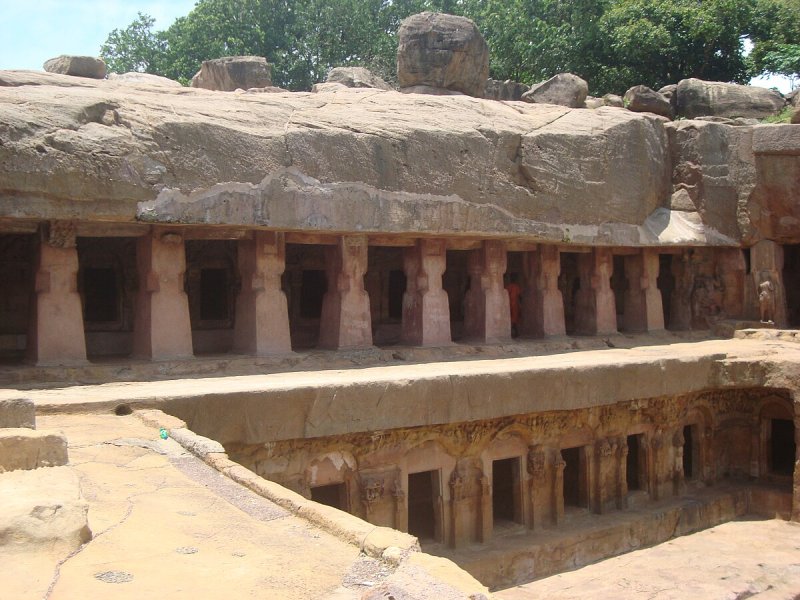
Udayagiri, meaning “Hill of the Sunrise,” is the larger and more prominent of the two hills, containing 18 caves. The most famous among them is the Rani Gumpha (Queen’s Cave), known for its beautifully carved façade, detailed sculptures, and narrative reliefs depicting royal life, hunting scenes, and religious symbols. These carvings provide valuable insights into the social and cultural life of that era.
Khandagiri, or the “Broken Hill,” has 15 caves and is slightly smaller in size. The caves here are simpler but equally significant, featuring meditation cells, inscriptions, and Jain symbols. From the top of Khandagiri hill, visitors can enjoy panoramic views of Bhubaneswar, making it a popular spot for sightseeing and photography.
Both hills are dotted with steps, pathways, and small shrines, creating a serene environment that once supported ascetic life. The caves highlight early examples of Indian rock-cut architecture and Jain religious art. Inscriptions found in the caves, especially the famous Hathigumpha inscription, are crucial historical records of ancient India.
Today, Udayagiri and Khandagiri Caves attract history lovers, archaeologists, students, and tourists from around the world. The peaceful surroundings, combined with their historical depth and artistic excellence, make them an essential part of Bhubaneswar’s heritage. A visit to these caves offers a fascinating journey into India’s ancient past and spiritual traditions.